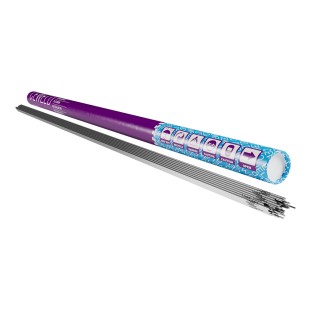
Lincoln LNT/LNM NiCroMo 59/23
CEWELD NiCrMo 59 weld deposit composition of 59%Ni-23%Cr-16%Mo is designed to match the nickel base corrosion resistant alloy commonly known as alloy 59. The high level of Mo is similar to alloys C276 and C4 but performance in a wide range of more oxidizing media is significantly enhanced by increasing Cr to 23% in alloy 59. Total alloying exceeds the level typically present in alloy C22; it is therefore considered suitable for welding this group of alloys. Alloy 59 consumables also provide strong, tough Nb-free weld metal for dissimilar welds in Superaustenitic and Superduplex stainless steels or combinations of these with nickel base alloys. Some authorities do not allow or have discontinued use of 625 type consumables for such applications, where deleterious Nb-rich precipitates may form in diluted or partially mixed regions around the fusion boundary. Alloy C276 is possibly a more economic alternative depending on the required properties in this situation.
Not required
Applications of NiCrMo 59 Tig in aggressively corrosive media include scrubbers for flue gas desulphurization (FGD), digesters and papermaking equipment, chemical process plants, corrosion resistant overlays and in severe offshore and petrochemical environments.
Applications of NiCrMo 59 Tig in aggressively corrosive media include scrubbers for flue gas desulphurization (FGD), digesters and papermaking equipment, chemical process plants, corrosion resistant overlays and in severe offshore and petrochemical environments.
CEWELD NiCrMo 59 weld deposit composition of 59%Ni-23%Cr-16%Mo is designed to match the nickel base corrosion resistant alloy commonly known as alloy 59. The high level of Mo is similar to alloys C276 and C4 but performance in a wide range of more oxidizing media is significantly enhanced by increasing Cr to 23% in alloy 59. Total alloying exceeds the level typically present in alloy C22; it is therefore considered suitable for welding this group of alloys. Alloy 59 consumables also provide strong, tough Nb-free weld metal for dissimilar welds in Superaustenitic and Superduplex stainless steels or combinations of these with nickel base alloys. Some authorities do not allow or have discontinued use of 625 type consumables for such applications, where deleterious Nb-rich precipitates may form in diluted or partially mixed regions around the fusion boundary. Alloy C276 is possibly a more economic alternative depending on the required properties in this situation.
NiCr23Mo16Al, NiCr21Mo14W, NiCr23Mo16Al, NiMo16Cr15Ti, NiMo16Cr15W, NiMo16Cr16Ti, X2CrNiMnMoN 17-12-2, NiCr26MoW
2.4608, 2.4605, 2.4602, 2.4610, 2.4819, 2.4692, 1.4562, 1.4563, 1.4529, 1.4539, 1.4404
Duplex, Super-Duplex and Super-Austenitic Stainless steels,
Nickel alloys such as UNS N06059 and N06022, INCONEL alloy C4, C-276, and INCONEL alloys 622, C22, 625, and 686 CPT, Alloy 31, Alloy 59, Alloy 33


| Heat Treatment |
RP0,2 (MPa) |
Rm (MPa) |
A5 (%) |
Impact Energy (J) ISO-V | Hardness | |
|---|---|---|---|---|---|---|
| -196°C | RT | |||||
| As Welded | 450 | 720 | 35 | 70 | 100 | HRc |
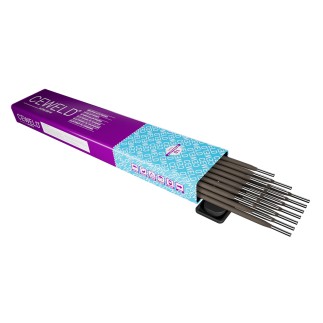
CEWELD NiCrMo 686 CPT
Ist ein Äquivalent für Lincoln LNT NiCroMo 59/23
CEWELD® NiCrMo 686 CPT ist eine einphasige, austenitische Ni-Cr-Mo-W-Legierung mit hervorragender Korrosionsbeständigkeit. Ihr hoher Nickel- (Ni) und Molybdänanteil (Mo) sorgt für eine gute Beständigkeit unter reduzierenden Bedingungen, während der hohe Chromanteil (Cr) für Widerstandsfähigkeit gegenüber oxidierenden Medien sorgt. Molybdän und Wolfram tragen zur Beständigkeit gegen lokale Korrosion, wie beispielsweise Lochfraß, bei. Der Eisengehalt (Fe) wird genau kontrolliert, um die Eigenschaften zu optimieren. Ein niedriger Kohlenstoffgehalt trägt dazu bei, Ausscheidungen an den Korngrenzen zu minimieren und so die Korrosionsbeständigkeit in den Wärmeeinflusszonen von Schweißverbindungen aufrechtzuerhalten.
Nicht erforderlich
CEWELD® NiCrMo 686 CPT ist besonders wertvoll in Betriebsumgebungen, in denen allgemeine Korrosionsbeständigkeit sowie Beständigkeit gegen Salzsäure oder Schwefelsäure, gegen Spaltkorrosion in heißen, konzentrierten Säurechloridlösungen, in mit Schwefeldioxid gesättigten NaCl-Lösungen sowie in oxidierenden Chloridlösungen erforderlich ist. Darüber hinaus ist es beständig gegen intergranulare Korrosion und sensibilisierungsbedingte intergranulare Korrosion in stark oxidierenden Umgebungen.
CEWELD® NiCrMo 686 CPT eignet sich auch zum überlegierten Schweißen von Legierungen der Typen 625, C276, C4, C22 und 59 sowie zum Schweißen von Superduplex- und superaustenitischen Stählen.
Anwendungsbereiche sind die chemische und petrochemische Industrie, das Auftragen korrosionsbeständiger Auflagen und Ventilsitzeinsätze sowie Abgasentschwefelungsanlagen.
CEWELD® NiCrMo 686 CPT ist besonders wertvoll in Betriebsumgebungen, in denen allgemeine Korrosionsbeständigkeit sowie Beständigkeit gegen Salzsäure oder Schwefelsäure, gegen Spaltkorrosion in heißen, konzentrierten Säurechloridlösungen, in mit Schwefeldioxid gesättigten NaCl-Lösungen sowie in oxidierenden Chloridlösungen erforderlich ist. Darüber hinaus ist es beständig gegen intergranulare Korrosion und sensibilisierungsbedingte intergranulare Korrosion in stark oxidierenden Umgebungen.
CEWELD® NiCrMo 686 CPT eignet sich auch zum überlegierten Schweißen von Legierungen der Typen 625, C276, C4, C22 und 59 sowie zum Schweißen von Superduplex- und superaustenitischen Stählen.
Anwendungsbereiche sind die chemische und petrochemische Industrie, das Auftragen korrosionsbeständiger Auflagen und Ventilsitzeinsätze sowie Abgasentschwefelungsanlagen.
CEWELD® NiCrMo 686 CPT ist eine einphasige, austenitische Ni-Cr-Mo-W-Legierung mit hervorragender Korrosionsbeständigkeit. Ihr hoher Nickel- (Ni) und Molybdänanteil (Mo) sorgt für eine gute Beständigkeit unter reduzierenden Bedingungen, während der hohe Chromanteil (Cr) für Widerstandsfähigkeit gegenüber oxidierenden Medien sorgt. Molybdän und Wolfram tragen zur Beständigkeit gegen lokale Korrosion, wie beispielsweise Lochfraß, bei. Der Eisengehalt (Fe) wird genau kontrolliert, um die Eigenschaften zu optimieren. Ein niedriger Kohlenstoffgehalt trägt dazu bei, Ausscheidungen an den Korngrenzen zu minimieren und so die Korrosionsbeständigkeit in den Wärmeeinflusszonen von Schweißverbindungen aufrechtzuerhalten.
ENiCrMo-14, E Ni 6686 NiCr21Mo16W4
2.4602, 2.4605, 2.4606, 2.4607, 2.4610, 2.4819, 2.4656, 1.4529,1.4547, 1.4565
NiCr23Mo16, NICr23Mo16Al, NiCr21Mo16W, NiMo16Cr15Ti, NiMo16Cr16Ti, NiCr21Mo14W, NiMo16Cr15W, NiCr22Mo9Nb, Alloy 59, Alloy C4, Alloy 276, X1NiCrMoCuN25-20-7, X1CrNiMoCuN20-18-7
ASTM: C-4, C-276, C-22, 625, 904hMo
UNS: N06059, N06455, N10276, N06625, N08925, S31254,N06686, N06022, N06059, N06200, N08367, NO8926, NO8031
Duplex, Superduplex, super austenitic stainless steel, Nickel Alloys, N06059, N06022, Hastelloy C276, Alloy C22, Alloy 59. Inconel 622, 625, 686, Outokumpu 654 SMO, Incoloy® Alloy 25-6MO, 27-7MO (Special Metals)
| Heat Treatment |
RP0,2 (MPa) |
Rm (MPa) |
A5 (%) |
Impact Energy (J) ISO-V | Hardness | |
|---|---|---|---|---|---|---|
| RT | -196°C | |||||
| As Welded | 450 | 760 | 40 | 100 | 80 | HRc |